Medical Dermatology
Photodynamic Therapy (PDT)
A light-based treatment for actinic keratoses, the most common precancerous skin spots.
At a glance
- What it treats
- Actinic keratoses (AKs) — rough, dry, scaly spots caused by too much sun.
- How it works
- We put a liquid on the spots. Then a blue light destroys the unhealthy cells.
- Number of visits
- Two treatments, spaced eight weeks apart.
- Downtime
- Minimal.
Unfamiliar word? See our glossary of skin care terms.
Photodynamic therapy (PDT) is used to treat actinic keratoses (AKs). AKs are rough, dry, scaly patches on the skin that vary in size and color. They are caused by too much exposure to ultraviolet (UV) light.
AKs are most often found on sun-exposed areas of the body, such as the face, scalp, ears, neck and hands. They are the most common precancer and can develop into squamous cell carcinoma, a type of skin cancer.
How photodynamic therapy works
- We apply a topical solution to your skin in the office. The AK cells absorb it.
- The solution turns into a substance that makes the AK cells extremely sensitive to light.
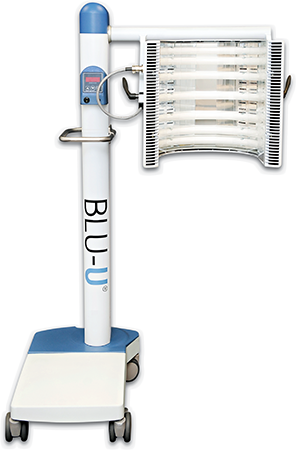
- The treatment area is exposed to a blue light illuminator. A reaction occurs, and the unhealthy AK cells are destroyed.
What to expect
PDT is a two-treatment process, with treatments spaced eight weeks apart. Minimal downtime is required.
Is Photodynamic Therapy right for you?
Every treatment plan at Pinnacle Dermatology starts with a conversation. Schedule a visit and our team will recommend the best options for your skin.